
Margaret
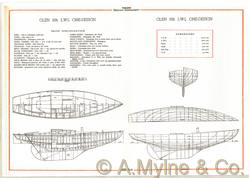
Margaret is a wooden sailing yacht of Glen Class design (design number 400), built in 1950 by W A Clapham of Bangor, Co Down. She measures 18 feet on the waterline with a beam of 6.5 feet and a draft of 4 feet, carrying 267 square feet of sail. The Glen Class was conceived by A. Mylne & Co. in 1945 and proved well-suited to both cruising and day sailing. Margaret remains in existence.
Ownership
No ownership records held for this vessel.
Crew
No crew records yet. If you've sailed on this yacht, claim your place in her history.
Specification
Details
Registry & Identity
Design Archive
 Misc
MiscDesign No. 400
Glen Class
Designed 1945
Sister Yachts
37 other vessels built to the same design.
Glen Shesk
1946
Glen Shiel
1947
Glenaan
1947
Glen Correl
1947
Glen Shane
1947
Lapwing
1948
Glen
1948· Not Known
Glen Gesh
1948
Glen Roan
1948
Glen Dun
1949
Glenariff
1949
Glen Roy
1949· No
Glen Moyle
1949
Glen Iris
1949
Glen Isla
1949
Glen Oe
1949
Osiris
1949· afloat
Glen Helen
1949
Dorinda
1950· No
Glen Orchy
1950
Glen Coe
1950
Glendhu
1950
Glen Reagh
1950
Glen May
1950
Glen Elg
1950
Glen Cree
1950
Glen Cona
1951
Pterodactyl
1951
Kingfisher
1951· Not Known
Glen Fern
1951
Unnamed (32
1951· No
Glen Cuan
1951
Glen Millar
1951
Glen Dora
1951
Glen Lena
1952· Not Known
Glen Lark
1952
Glen Luce
1965
Historical Context
The Glen Class, designed in 1945 as the war in Europe concluded, emerged during a period of renewal in British yacht design. A. Mylne & Co., the prominent Scottish office, produced designs across a broad spectrum of vessel types. The Glen Class occupied a distinctive position: modest in size, economical to build, yet capable of genuine cruising work. The choice of W A Clapham as builder reflects the dispersed nature of British yacht construction, with regional builders adopting Mylne designs. Northern Ireland possessed its own shipbuilding traditions, and Bangor's location on Belfast Lough made it a natural centre for small-craft work. Margaret, built in 1950, represents the design's maturity in practice, five years after the class was conceived and during a period when wooden construction remained the norm for vessels of her size.