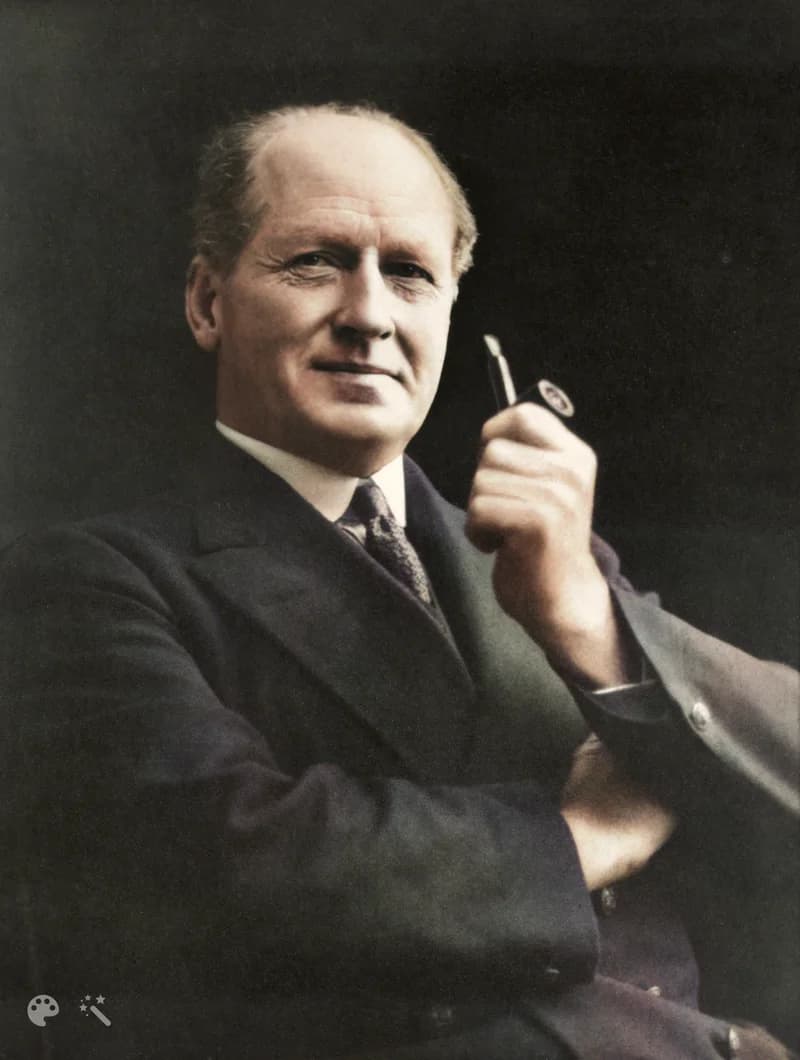
History - Alfred Mylne I
In 1888, a 16-year-old Alfred Mylne commenced his illustrious career in the maritime world as an apprentice at the esteemed Scottish shipbuilders, Napier Shanks, and Bell. Despite his foundational experiences, it was his fervor for sailing that led him to the pioneering yacht designer, George Lennox Watson, in 1892. Serving as a draftsman, Mylne contributed to the creation of iconic vessels like the Royal Yacht Britannia, Valkyrie II, and Valkyrie III, manifesting his early influence on legendary ships and defining competitions like the America's Cup.
However, Mylne’s ambition transcended the boundaries of an apprentice. By 1896, Mylne had established his own design office, laying the foundations for what is possibly the world’s oldest yacht design business still in existence today, a legacy that outlives him, marked by elegance and innovation.
Mylne’s journey was interlaced with both accolades and rivalries. He was pivotal in devising the International Metre Rule in 1906, leading to the conception of numerous winning yachts, marked by the unprecedented success of the 19-metre cutter, “Octavia”. His designs, renowned for their elegance, attracted commissions for cruisers, racing dinghies, and commercial crafts of diverse magnitudes, solidifying his reputation as a versatile designer.
In 1911, his journey took a pivotal turn as he acquired a yacht-building yard with his brother Charles, overseeing its operations until his retirement in 1946, passing the torch to his nephew, Alfred Mylne II. Mylne’s resilience and adaptability were evident as he navigated the design office and yard through the tumults of the World Wars, creating crafts for the Royal Navy and components for the Royal Naval Air Service's flying boats.