A Legacy of Yacht Design Since 1896
For more than 130 years, Mylne has designed some of the world's finest sailing yachts, preserving a tradition of innovation, craftsmanship and elegance that continues today.
One Hundred and Thirty Years
In 1896 a young man of twenty-four opened a design office on the Clyde. Alfred Mylne had trained under G.L. Watson, the most celebrated naval architect in Britain, and he carried with him not only the technical skills of that education but a deep conviction that a sailing yacht should be both fast and beautiful — that performance and proportion were not opposing ambitions but the same ambition pursued through different means.
The timing was extraordinary. The Clyde in the 1890s was the centre of the yachting world. The great design offices — Fife, Watson, Mylne — competed for commissions from the most serious owners in Britain and beyond. Racing was international, standards were demanding, and the reputation of a designer rested entirely on the performance of his yachts. In that environment, Mylne thrived. Design followed design. The number book grew. Clients returned, season after season, for new yachts built to the same exacting standard.
The golden age of the Clyde lasted from the 1890s until the Second World War brought almost all pleasure sailing to a halt. In those decades Mylne produced some of the finest yachts ever designed in Britain: ocean cruisers of commanding presence, racing yachts of extraordinary performance, and the kind of everyday sailing yacht — beautifully proportioned, well-built and genuinely seaworthy — that owners kept for decades and passed on to their children.
When Alfred Mylne died in 1951, the practice passed to his nephew Alfred Mylne II, who continued the family tradition through the changed landscape of post-war yachting. The office remained active, the standards remained high, and the design number continued to grow. When Ian Nicolson joined as partner and eventual successor, the practice entered a new phase — no longer a family firm in the original sense, but still the inheritor of the methods, the values and the reputation that Alfred Mylne had established fifty years before.
After Nicolson's retirement the office wound down, and with it came the question that haunts every historic archive: what happens to the records? The drawings, the correspondence, the calculations — thousands of documents representing more than a century of creative work — were at genuine risk of being scattered or lost. That they survived intact is due to a single act of preservation.
In 2007 David Gray acquired the Mylne archive and began the long process of sorting, cataloguing and digitising more than a hundred years of material. It was painstaking, often solitary work, driven by the conviction that the story of Mylne was worth telling and that the archive was the evidence on which that story rested. The result, eventually, was the Alfred Mylne biography published in 2023 — the first comprehensive account of one of the great figures of British yacht design — and the creation of the online archive and Mylne's Register of Yachts that makes the material accessible today.
The story of Mylne is not over. It continues in every yacht that still sails, in every owner who takes the time to understand the provenance of what they have, and in every researcher who opens the archive and finds, in those drawings and letters and calculations, evidence of something that was made with care and intended to last. That, in the end, is what heritage means: not a record of what happened, but a living connection to how it was done.
The Mylne Timeline
- 1896
Foundation
Alfred Mylne establishes A. Mylne & Co. in Glasgow at the age of twenty-four, opening a design office on the Clyde that would shape the course of British yacht design for the next century.
- 1900 – 1939
The Golden Age
The Clyde becomes the centre of the yachting world. Mylne designs win international races, attract royal patronage and cement the office's reputation alongside Fife, Watson and Nicholson as one of the pre-eminent design houses of the era.
- 1946
Alfred Mylne II
Alfred Mylne II takes the helm of the practice on his uncle's retirement, maintaining the design standards and client relationships built before him while adapting to the changed world of post-war yachting.
- 1950s
Ian Nicolson
Ian Nicolson joins the practice as partner and successor, bringing his own approach to design and ensuring the continuity of the office beyond the Mylne family name.
- 2007
The Archive is Saved
David Gray acquires the Mylne archive — thousands of original drawings, correspondence and records spanning more than a century — and begins the long process of preservation, cataloguing and digitisation.
- 2023
The Biography
The definitive biography of Alfred Mylne is published, drawing on the archive and decades of original research. The story of one of yacht design's great figures is told in full for the first time.
- Present
The Digital Archive
The Mylne archive is accessible online. Mylne's Register of Yachts connects owners, researchers and restorers to the original design records. The story of Mylne continues through every yacht still sailing.
The Mylne Legacy
The continuity of Mylne is not a story of ownership but of custodianship — each generation receiving the legacy of the last and holding it in trust for the next.
Mylne and Fife
Two design offices, one river, and a combined legacy that defined the golden age of British yacht design.
Mylne
A. Mylne & Co. was established on the Clyde in 1896 by Alfred Mylne, who trained under the great G.L. Watson. From the outset the office combined technical rigour with an acute sensitivity to the proportions that make a yacht beautiful under sail. Mylne designs are characterised by a certain quiet authority — powerful, seaworthy and elegant without ostentation.
Over more than a century, the practice produced more than seven hundred designs covering the full spectrum of sail and power, from twelve-metres and ocean racers to cruising yachts and motor vessels. The archive preserves not only the drawings but the correspondence, calculations and client records that reveal how those designs came to be.
Glasgow, 1896 – present
Fife
William Fife III of Fairlie, Ayrshire was Mylne's near-contemporary and the other defining voice of Clyde yacht design in the golden age. Where Mylne brought the analytical precision of a trained naval architect to his work, Fife was the inheritor of a multi-generational boatbuilding tradition, his designs shaped by an almost instinctive understanding of form and flow.
The two offices were rivals, contemporaries and mutual influences. Together they gave the Clyde a reputation for yacht design that extended far beyond Scotland — to the America's Cup, to the Mediterranean regattas, and to the private harbours of every major sailing nation. That their archives have both survived is, in itself, remarkable.
Fairlie, Ayrshire, 1812 – 1938
The combined legacy of Mylne, Fife, Watson and Nicholson represents the high-water mark of British yacht design. Each brought a distinctive approach; together they defined what it meant to build a great sailing yacht in the age of sail's last flourishing. That tradition lives on in every Mylne yacht still on the water.
Iconic Mylne Yachts
 No. 183
Pilgrim
A pre-war Mylne cruiser representing the peak of Edwardian yacht design — long, lean and seaworthy. Pilgrim embodies the design principles that made Mylne a byword for quality on the Clyde.
View Design → No. 362
Panope
One of the great Mylne ocean cruisers of the inter-war period, Panope demonstrates the office's mastery of the larger yacht. Her lines combine performance under sail with the comfort demanded by serious offshore passages.
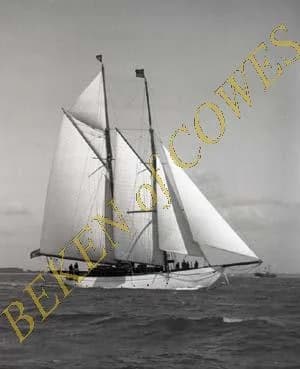
View Design →Canada Cup 1905
The Canada Cup races of the early 1900s brought Mylne to international attention. Competing in North American waters, these designs proved that the Glasgow office could hold its own against the best the world had to offer.
View Design →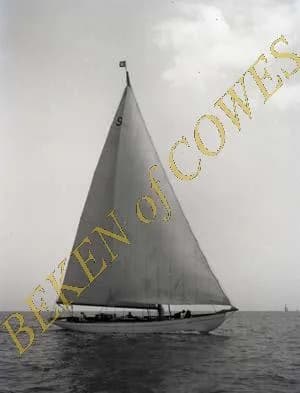
Tigris
One of the iconic names from the Mylne design list, Tigris represents the racing successes that established the firm's international reputation during the golden age of the Clyde.
View Design →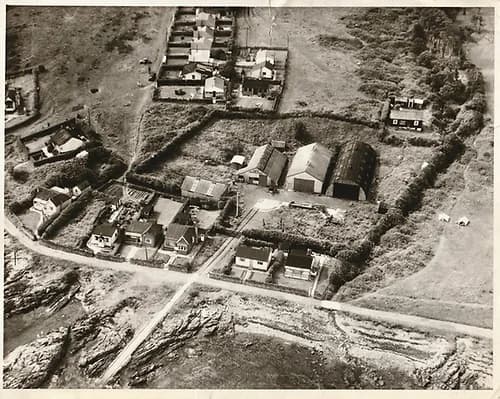
Glen Class
The Glen Class designs brought Mylne quality within reach of a wider ownership. Versatile, well-built and with genuine character, they became some of the most-loved yachts ever to sail from a Scottish yard.
View Design →Highland Fling
Highland Fling carries the spirit of the Scottish highlands into its name and its sailing. A Mylne design with presence — fast enough to race, substantial enough to cruise, and beautiful enough to admire.
View Design →The Archive
More than a century of original material — drawings, correspondence, photographs and records — preserved, catalogued and now accessible online.
Original Drawings
Lines plans, sail plans, deck layouts and construction drawings — the working documents of more than seven hundred yacht designs, many never previously published.
Correspondence & Records
Letters between Mylne and his clients, builders and contemporaries. A first-hand account of how great yachts were conceived, discussed and built.
Photographs
Launch photographs, racing images and portraits documenting more than a century of yachts on the water. Many images have never been publicly exhibited.
Living Heritage
Heritage is not preserved by institutions alone. It lives in the people who care for the yachts, research the designs and keep the story moving forward.
Owners
Every Mylne yacht still sailing is a piece of living history. Owners who care for these vessels are as much a part of the story as the original designers and builders.
Claim Your Yacht →Restorers
Restoration is one of the most direct forms of heritage work. Those who take a classic Mylne yacht back to her original condition are preserving something irreplaceable.
Ownership Support →Researchers
The archive exists to be used. Historians, journalists, students and enthusiasts who work with the Mylne material help to build the body of knowledge around these designs.
Access the Archive →Supporters
The work of preservation — cataloguing, digitising, researching and publishing — depends on the support of those who believe in the value of what is being saved.
Become a Supporter →Become Part of the Story
The heritage of Mylne is not confined to the past. The archive, the register and the yachts themselves are active, living things — and they need the people who care about them.