Saving the Archive
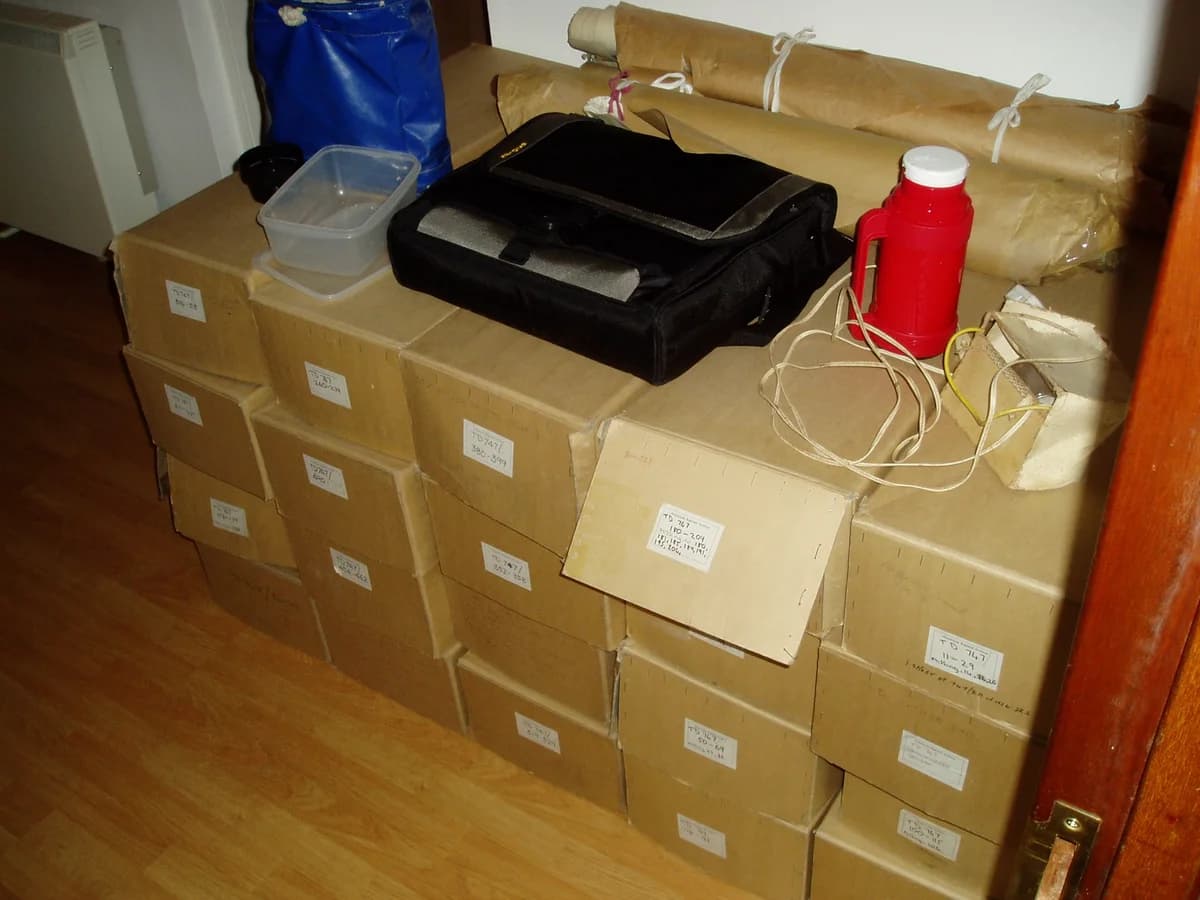
Archives are fragile things. They survive through luck and care in roughly equal measure, and the Mylne archive was no exception. By the time Ian Nicolson retired and the practice finally wound down, the material was held in storage — boxes of drawings, files of correspondence, folders of calculations — representing more than a hundred years of working documents from one of Britain's most significant yacht design offices. That it was still intact was, in itself, a small miracle.
The risk was real. Archives of this kind are lost in any number of ways: to damp and mould; to buildings that are cleared or sold; to executors who see paper and boxes where others see history; to the simple passage of time and the attrition of interest. For every archive that survives, there are dozens that do not. The drawings for entire classes of famous yachts have been lost. The correspondence of designers who shaped the history of their sport has been discarded. The Mylne archive could easily have gone the same way.
In 2007, David Gray acquired the archive. It was not a simple or inexpensive transaction, and the work that followed — sorting, cataloguing, conserving, photographing and digitising thousands of individual items — took years of patient effort. The drawings alone numbered in the thousands, ranging from complete lines plans and construction drawings to single-sheet sketches and detail studies. The correspondence ran to hundreds of letters. There were photographs, accounts, client files and the accumulated paperwork of a professional practice that had operated continuously from 1896 to the late twentieth century.
The cataloguing work was fundamental. An archive that cannot be navigated is an archive that cannot be used. Each drawing was assigned to its design, each design indexed, each piece of correspondence dated and filed. It was the kind of work that receives little recognition but without which nothing else would be possible — the invisible infrastructure that turns a pile of paper into a resource.
Digitisation followed. High-resolution scans of the drawings, photographs of the correspondence, systematic photography of the three-dimensional material. The digital archive now exists in multiple copies, backed up and preserved against the physical deterioration that claims all original material eventually. The originals are conserved. The digital versions are accessible.
The biography of Alfred Mylne, published in 2023, was the first major public product of this work — a comprehensive account of the man, the practice and the yachts, drawing directly on the archive for its evidence. It told a story that had not been told before, drawing on material that had not previously been published, and placed Mylne in the context of the wider history of British yacht design where he had always belonged.
Mylne's Register of Yachts followed: a searchable database of Mylne designs connecting owners, researchers and enthusiasts to the original records. For the owner of a Mylne yacht who wants to understand what they have — the design number, the original drawings, the builder, the history — the Register provides a direct connection to the archive that created it.
The archive is not complete. Some drawings are missing. Some correspondence has not survived. There are gaps that can probably never be filled. But what exists is substantial, it is preserved, and it is now accessible in a way that it has never been before. That is the result of the decision taken in 2007 not to let it go.